
Article
Beyond the Pipeline: How Legal Tech CROs Are Driving Operational Excellence
By Keith Fenner June 15, 2026
The Shift to Commercial Orchestration
Historically, CROs focused strictly on sales performance. Today, the mandate is broader and far more demanding.
Modern CRO leadership hinges on three critical pillars:
- End-to-end ownership of the go-to-market model, from positioning and messaging through to delivery and client success
- Cross-functional alignment across sales, marketing, product, and operations centered on shared objectives.
- A relentless focus on clarity, accountability, and measurable outcomes
Siloed organizations inherently breed inconsistent, unsustainable growth. In contrast, unified teams executing a shared strategy transform performance into a predictable asset.
At Morae, we have seen firsthand that growth is not driven by activity alone. It is driven by clarity in direction and discipline in execution, supported by strong collaboration across the business.
Translating Legal AI Complexity into Measurable ROI
The legal industry is undergoing a structural overhaul. Technology, particularly AI, is reshaping how legal work is delivered, how value is measured, and how decisions are made.
For clients, this transformation creates both immense opportunity and friction:
- More tools and solutions than ever before
- Greater expectation for efficiency, transparency, and ROI
- A shift from point solutions to integrated, outcome-based approaches
In this environment, clients are not looking for technology vendors; they want strategic partners who can:
- Simplify operational complexity
- Provide clear pathways from problem to outcome
- Deliver consistent, measurable value over time
This is where modern commercial leadership becomes critical. A CRO's role is to ensure that what a company promises in the market is fully aligned with what it delivers, and that both are anchored in real client outcomes.
Internal Velocity, External Trust: The Dual Mandate of Alignment
While the concept of corporate alignment is simple, executing it across a scaling business is notoriously difficult — yet it remains one of the most significant differentiators in today's market.
Internal cohesion ensures that:
- Strategy, messaging, and execution are consistent
- Teams are working toward the same goals
- Data and insights are shared and acted upon
Externally, alignment ensures that:
- Clients experience a consistent, coherent engagement
- Expectations are clearly defined and managed
- Value is measurable and visible
Misalignment cripples even the strongest individual capabilities, stalling meaningful results.
Conversely, unified organizations move faster, pivot quicklyto meet client needs, and cultivate deep, long-term relationships anchored in trust and performance.
Predictability as a Competitive Advantage
In many industries, growth is still treated as a function of momentum or market conditions. In a mature, tech-enabled environment, that is no longer sufficient.
Clients expect predictability: predictable outcomes, predictable delivery, and predictable value. That expectation extends directly to their partners.
Modern CRO leadership focuses squarely on building systems, processes, and operating models that enable repeatable, scalable success. This includes:
- Clear commercial frameworks
- Defined metrics and performance indicators
- Structured engagement models that guide both the provider and the client
Ultimately, the ability to align strategy with measurable impact allows organizations to transition from reactive growth to sustained performance.
From Vendor to Partner: What Modern Legal Buyers Actually Deserve
For clients, all of this comes down to one simple question: What should you actually expect from a commercial partner?
At a bare minimum, you deserve:
- Absolute clarity on how your specific challenges are being solved and exactly what outcomes to expect.
- True alignment from a partner whose internal teams, technology, and day-to-day approach work in total sync.
- Real accountability, backed by measurable success criteria and complete transparency on performance.
- Flawless execution and the proven ability to deliver consistently against every single commitment.
When these elements are locked in, the relationship naturally moves past transactional vendor exchanges and becomes a true partnership.
Purpose Over Pace: The True Winner of the Legal Tech Shift
As the legal services market continues to evolve, the role of the chief revenue officer drives more than just sales— it shapes how organizations operate and how they create sustainable value for clients.
For Morae, the focus remains clear:
- Align the business around a unified strategy.
- Deliver measurable outcomes for our clients.
- Build a model that supports predictable, scalable growth.
In a market defined by change, the organizations that succeed will not be those that move the fastest. Success belongs to the teams that move with purpose, alignment, and clarity.
About the Author
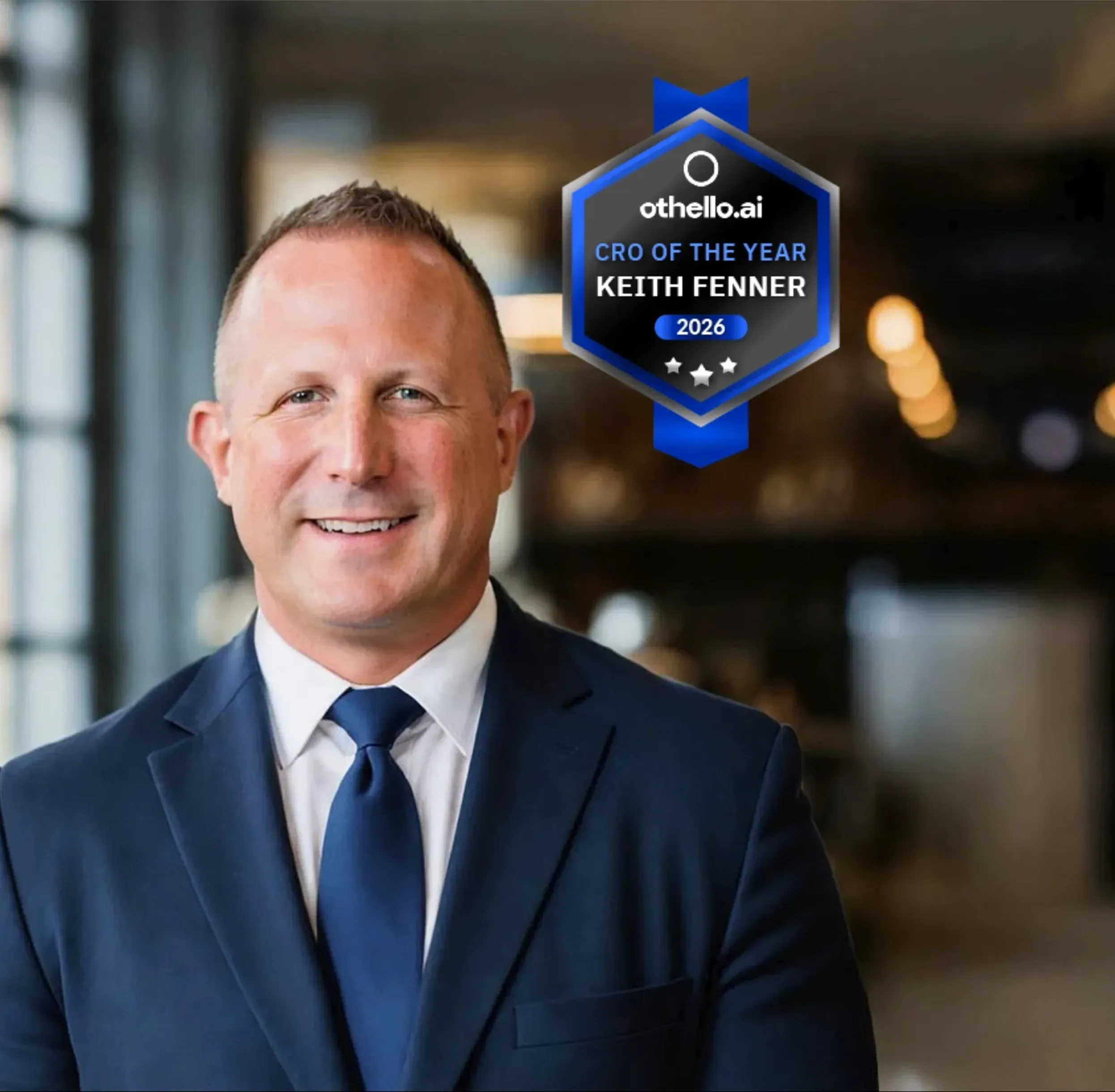
Keith Fenner is Chief Revenue Officer at Morae, where he leads the company’s global commercial strategy, go-to-market execution, and client growth initiatives. He was recently recognized as 2026 CRO of the Year by Othello, reflecting his leadership in driving alignment, accountability, and measurable impact across the legal services market.
Looking Ahead
As the legal services market continues to evolve, the role of the CRO will remain central, not just in driving growth, but in shaping how organizations operate and how they create value for clients.
For Morae, the focus remains clear:
- Align the business around a unified strategy
- Deliver measurable outcomes for clients
- Build a model that supports predictable, scalable growth
Because in a market defined by change, the organizations that succeed will not be those that move fastest, but those that move with purpose, alignment, and clarity.
About the Author
Keith Fenner is Chief Revenue Officer at Morae, where he leads the company’s global commercial strategy, go-to-market execution, and client growth initiatives. He was recently recognized as 2026 CRO of the Year by Othello, reflecting his leadership in driving alignment, accountability, and measurable impact across the legal services market.
Keith Fenner is Morae's Chief Revenue Officer, leading sales, marketing, and customer success. He brings over 25 years of commercial leadership experience at companies including Microsoft, Sage, and Diligent.
